AI-Powered Face Anonymisation For Clinical Data Management
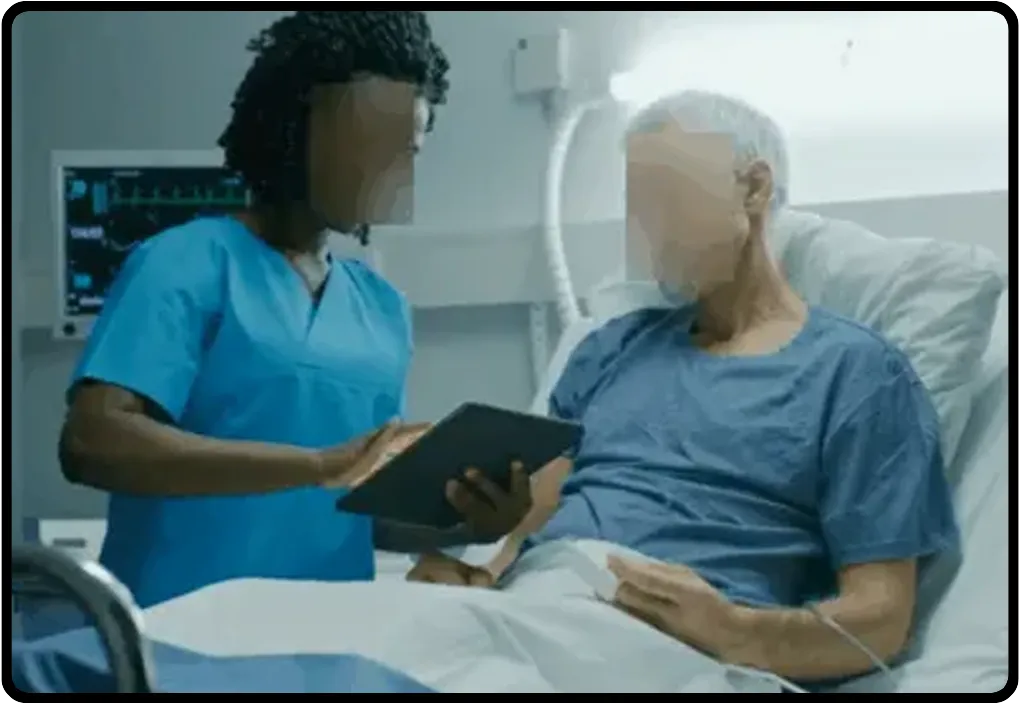
How we built a production-ready video anonymisation pipeline with four deployment modes — from on-premise to real-time — for a regulated content platform.
The Challenge
A clinical data management company needed to use real patient-interaction footage for training and analytics — but every frame with an identifiable face was a compliance liability under GDPR, India’s DPDP framework, and tightening US state biometric laws. Manual blurring in After Effects was slow, inconsistent, and couldn’t scale. Off-the-shelf tools kept failing in three ways: missing faces in profile shots, producing flickering output, and silently stripping the audio track.
What we Built
A unified face-anonymisation architecture with four deployment modes, each optimised for a different constraint:
On-premise (MTCNN)
Footage never leaves the network. Zero per-minute cost. Built for medical, defence, and HR content.
Cloud-scale (Rekognition)
Parallel worker threads against AWS. An hour of 4K video processed in minutes, not hours.
Hybrid (dual-detector)
Two independent models; blur anything flagged by either. Near-zero false negatives for regulated submissions.
Real-time (YOLO + MediaPipe)
Live preview with on-the-fly blur controls. Runs on modest hardware. Built for broadcast and events.
Technology Used
 Python
  OpenCV
  MTCNN
MTCNN  YOLOv8
  AWS Rekognition
  MediaPipe
  FFmpeg
  MoviePy
 Key Engineering Decisions
- Detection JSON as a contract — every run produces an auditable, frame-by-frame detection record separate from the rendered video. Compliance teams can review what was detected without re-running the model.
- Temporal smoothing — when a face is detected in frames N-1 and N+1 but missed in N, the pipeline interpolates. No flicker. Continuous output.
- Audio preservation — original audio track preserved bit-for-bit through every pipeline mode. No silent clips, no re-sync workflow.
- Configurable output — blur strength, pixelation density, mask shape, and anonymisation style are all parameters. Brand-safety and editorial teams get different settings from the same engine.
Results
- Unlocked use of real patient-interaction footage for training — previously shelved for compliance reasons
- Turnaround from raw footage to anonymised, audit-ready output dropped from days to minutes
- Deterministic re-runs: same input + same detection JSON = byte-identical output, satisfying regulatory audit requirements
- Single architecture serves four deployment contexts without code duplication
_"Bring us a clip; we'll show you what comes back. Faces, gone. Audio, intact. Deadlines, met."_